Midnight steer roping
Almeida e Dale — 2025-06-28
DAVID ALMEIDA - 2025
“Dear reader in this stanza Please do not mock me No one heard the blast But I swear it was so For every devil story Ends with a bang”
Patativa do Assaré
In the cordel¹ tale Brosogó, Militão e o Diabo², the famous Ceará poet Patativa do Assaré, Brosogó is a devout peasant who, tasked with fulfilling his religious duties, goes around with a bundle of candles to light up in honor of saints during the novena. He remembers each of them and lights a candle on each altar. Aware that he hasn’t forgotten anyone, he finds it odd that he’s left with three candles, which he decides to dedicate to the Devil on the altar with no name – who, after all had never harmed him in any way. This tribute to the Devil should serve as a fee for the Wicked One’s defense of him in a lawsuit by Militão, the capitalist who owns the bodega. Militão had sold eggs on credit to Brosogó and then charged him interest equivalent to the price of all the unborn chickens from the dozen eggs he had brought home.
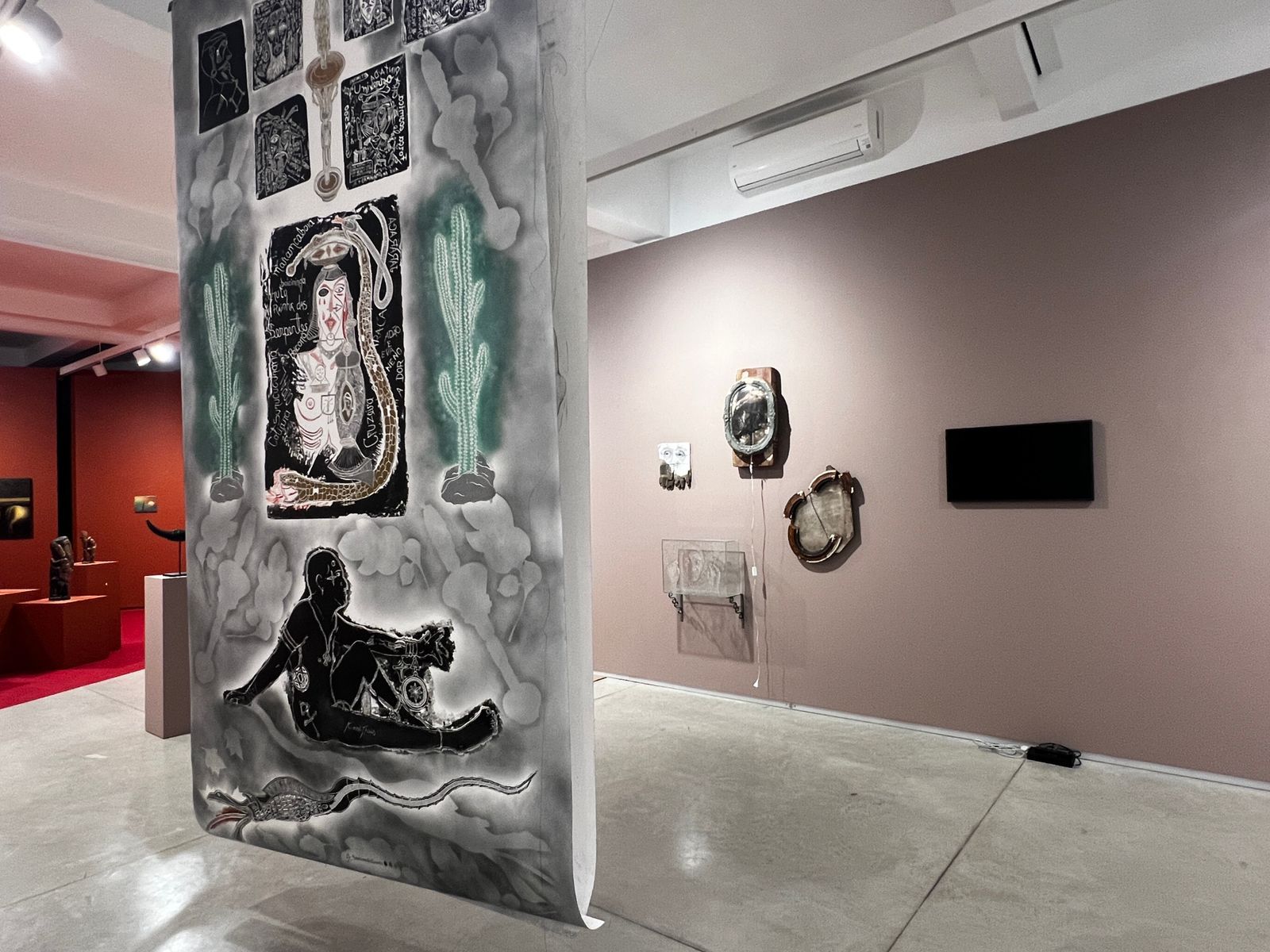
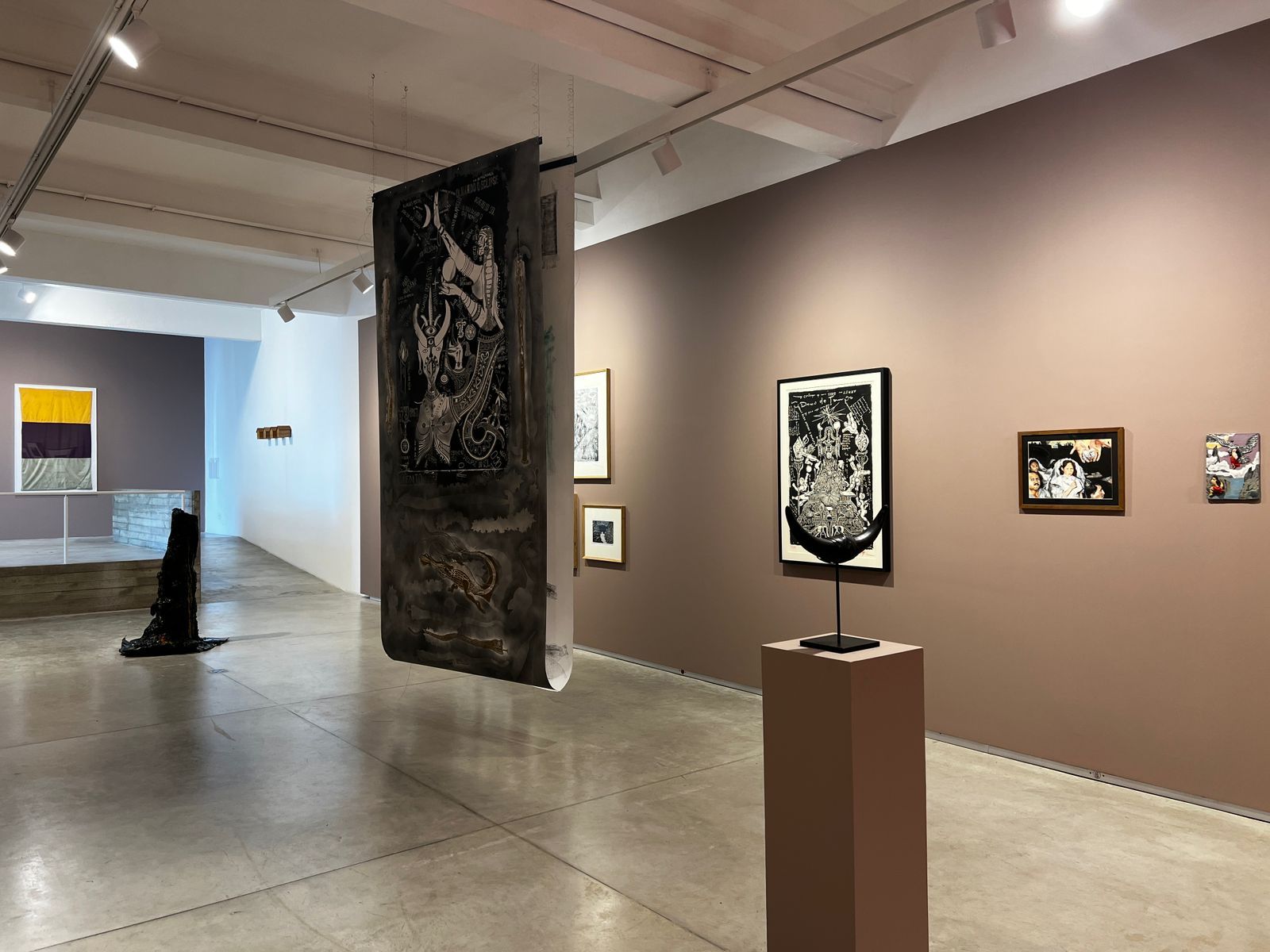
This tale illustrates, with amazement and fantasy, some of the dynamics that define Brazilian stories — dynamics in which the means of protection against certain powers of oppression are born precisely from negotiations with the absurd, with the folk sacred: one’s attorney against the abuse of capital is no less than Satan. Amid wandering saints, visages, and corteges of revelry and penitence, Vaquejada da Meia-Noite (Midnight Steer Roping) features work by artists who illustrate the Faustian pacts entered into by the cowboy — here, an avatar of resistance — at the crossroads between country realism, arid and geographic, and religious syncretism, fable, and scary tales.
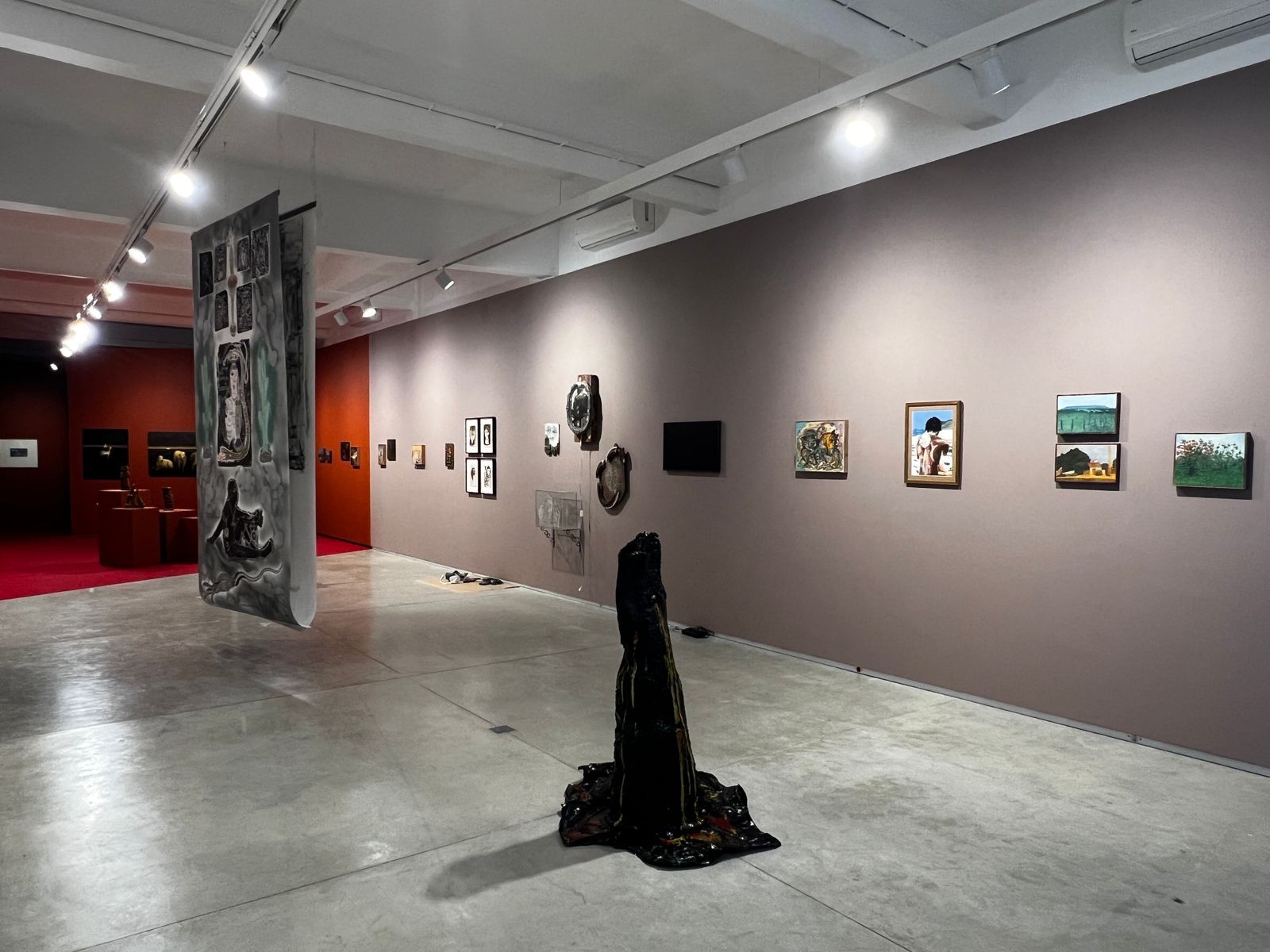
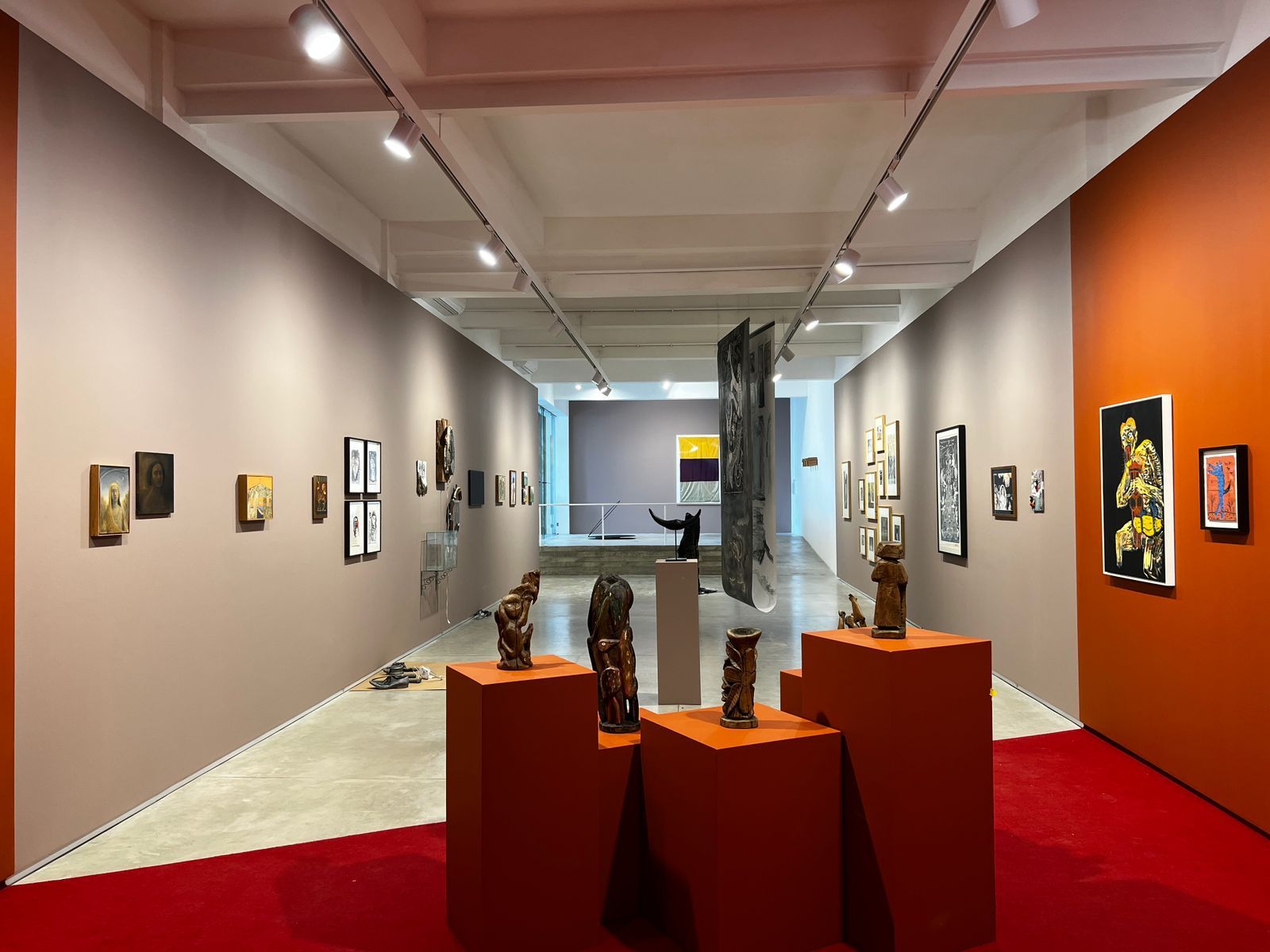
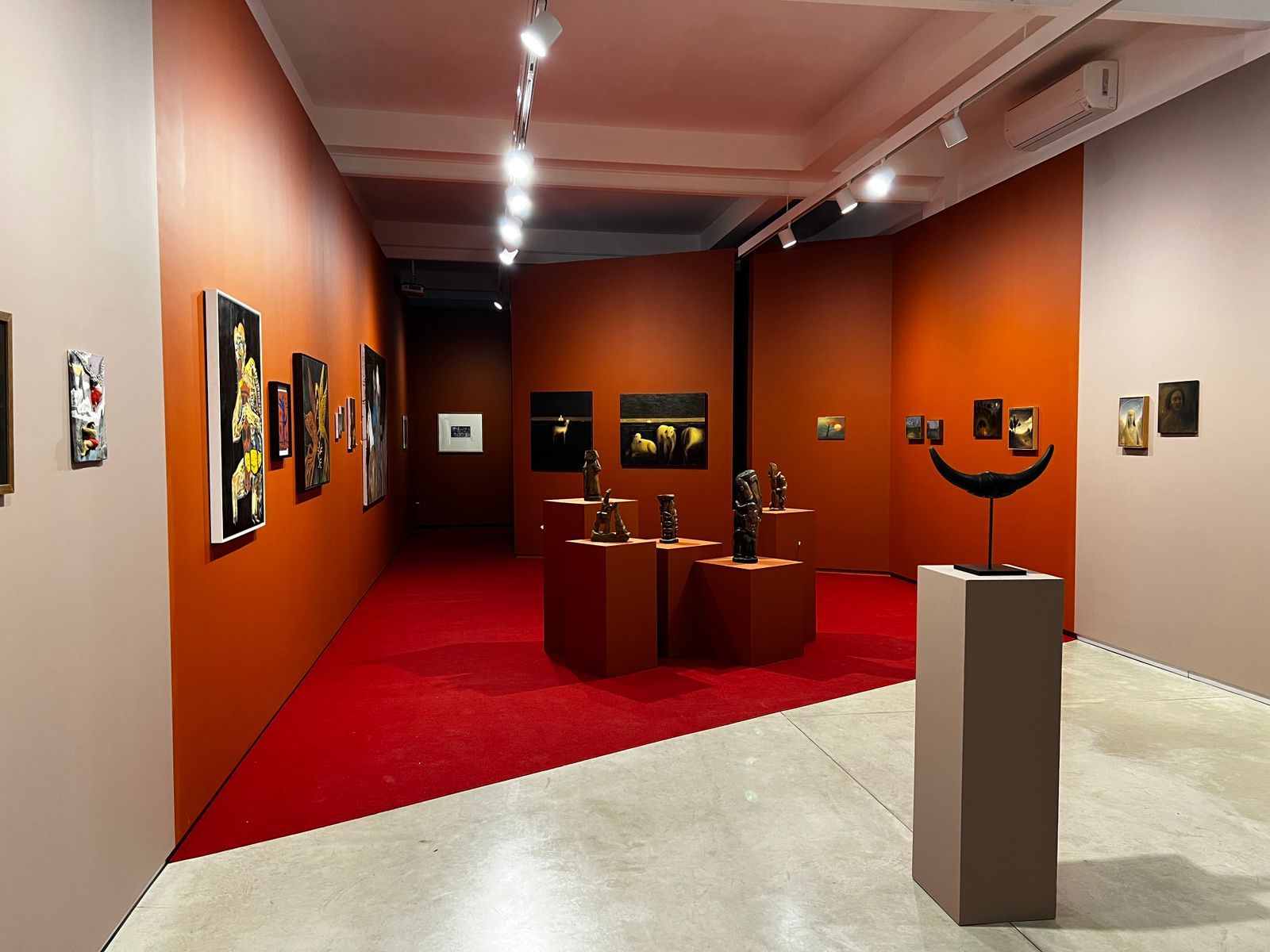
In bringing together the work of different generations of Ceará artists, the exhibition builds out a narrative that echoes the backcountry in its multiple dimensions – archaeological, mystical, political, and poetic –, delving into the imaginary of different parts of the state and exploring the boundaries between sacred and profane, folk reality and redemptive mysticism.
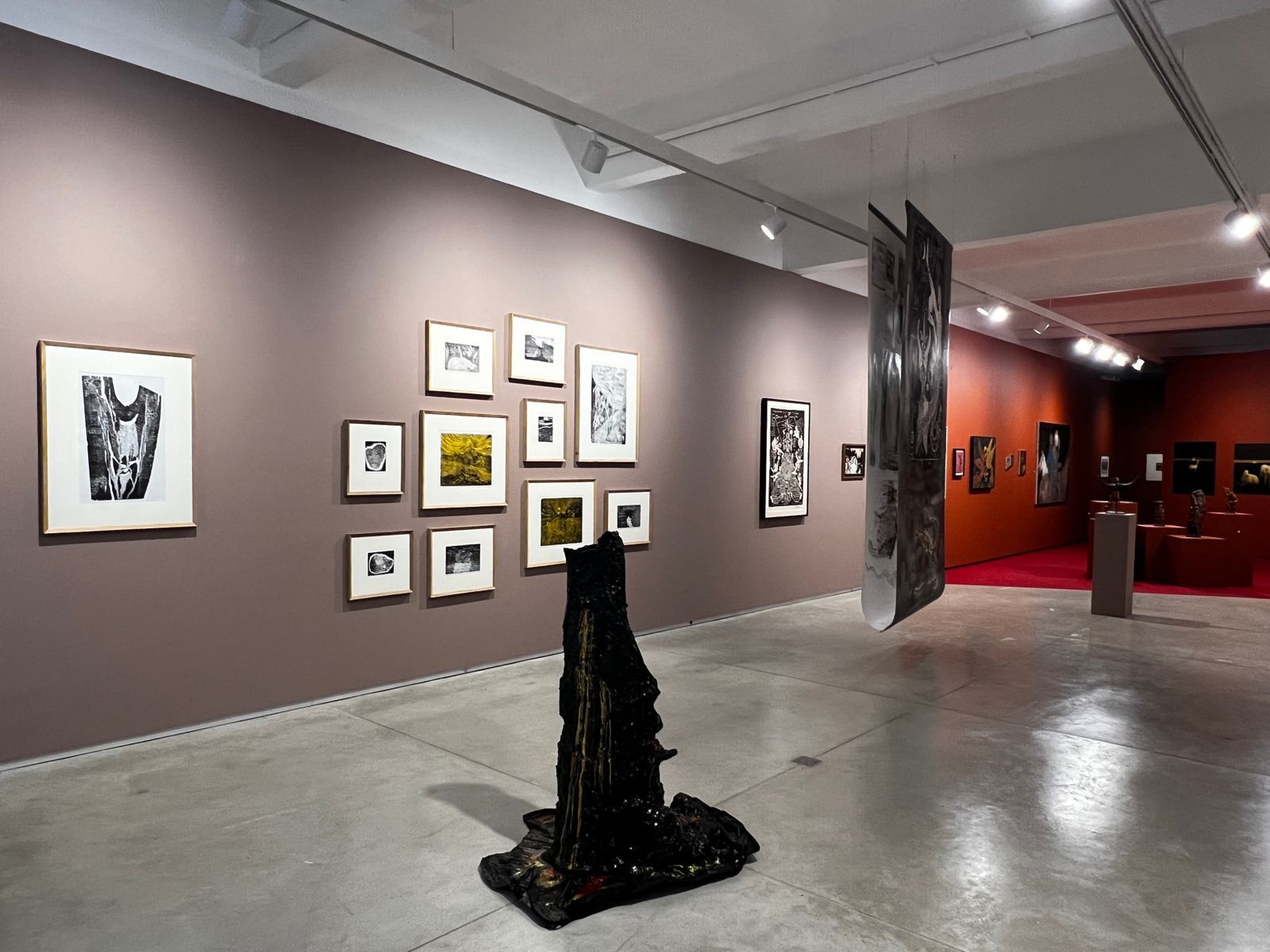
The exhibition begins with work by the engravers José Lourenço, Stênio Diniz, and Francisco de Almeida – born in Juazeiro do Norte and Crateús –, which, taken together, evidence the diversity of traditional woodcut work in Ceará. Zé Lourenço transports us to the landscapes of Chapada do Araripe — a territory infused with a mystique where prehistoric past and religious fervor interweave. The Cariri, a region marked by the symbolic presence of Padre Cícero and by archaeological sites, constitutes a fantastic inventory unto itself, where science and belief coexist somewhat harmonically. Lourenço explores this duality by incorporating figures that converse with the remote past and the contemporary present, revealing the timelessness of the landscape.
With Stênio Diniz — an engraver whose family once ran Gráfica São Francisco, a former print shop that is now the cultural hub Lira Nordestina —, the landscape becomes a space of conflict between the political and the symbolic. The scenes in his engravings extend beyond naturalism and incorporate fantastic elements that question reality. Mighty rivers and metaphorical gear sets reveal the artifice of the landscape and evidence the social debate present throughout his oeuvre, with characters featured in epic battles against contemporary adversaries such as capital and climate tragedies. Ever since the military dictatorship, Diniz has honed his craft through resistance, creating a universe where the fantastic illustrates class conflict.
In turn, Francisco de Almeida, an engraver from Crateús, infuses these landscapes with his repertoire of religion, folklore, and resistance which, in this case, extends beyond the scale: large engravings depict curious beings that populate a common firmament in the large area of the paper.
Next up, Thadeu Dias guides us into the intimate with the image of a religious confirmation rite, evoking the strangeness in familiar things. In this dimly lit piece, the lines between the sacrosanct and the heretical become blurred – a secret shared in a space where Brazilian folk Catholicism manifests itself in an ambiguous, evocative manner.
Arivanio presents grotesque mythological figures – like the Imbroxável (Virile One), who devours an indigenous man, in a direct allusion to Goya’s Saturn –, organized here by the singular gesture of his research. The works of the artist, born in Quixelô, tension the space between the political and the mythical, combining werewolves and monstrosities with current Brazilian events and personalities. Armageddon, illustrated by a cockfighting match, translates the prophetic clash of biblical apocalypse through new folk metaphors, evidencing the extent to which myth inhabits daily life.
Julia Aragão and Artur Bombonato explore the mystery of catholic signs and folk festivities. Júlia’s birds, which evoke the Holy Spirit and the other animals in the fauna of saints, share in the fantastic and terrifying nature of street festivities, populated by Artur’s mask-wearing riders who stare at us like sentinels in a procession of absurdity.
Gustavo Diógenes and Siebra update country imagery by replacing the cowboy on horseback with a motorcycle and a pink helmet, with empty bars that become urban reliquaries of an empty countryside still occupied by pilgrim saints and legendary one-eyed men. Gustavo introduces us to the protagonists of this steer-roping night, the guardians of a mass that lasts until dawn, whereas Siebra shows us his devotees marching and in communion. Here, the backcountry is urban, arid, and contemporary – a mosaic of open time in constant mutation.
Beatrice Arraes and Terezinha de Jesus – the author of the very first painting I ever saw – explore the bestiary and the landscape as protagonists of Earth’s narratives, where man and creature merge and the Moon and the Sun illuminate the dry vegetation concurrently. In turn, Sérgio Gurgel creates objects onto which the countenance of memory is engraved; it is incarnated in the figure of his patron saints, whose gestures occupy the entire artwork, underpinned by a charged-up maternal ancestry. Immersed in Juazeiro’s Reisado culture, Gilberto Pereira paints body parts and heads adorned like the ex-votos left by worshipers in the Horto neighborhood, which, here, play the role of fulfilled vows with a patchwork quilt of the symbolic bodies in processions.
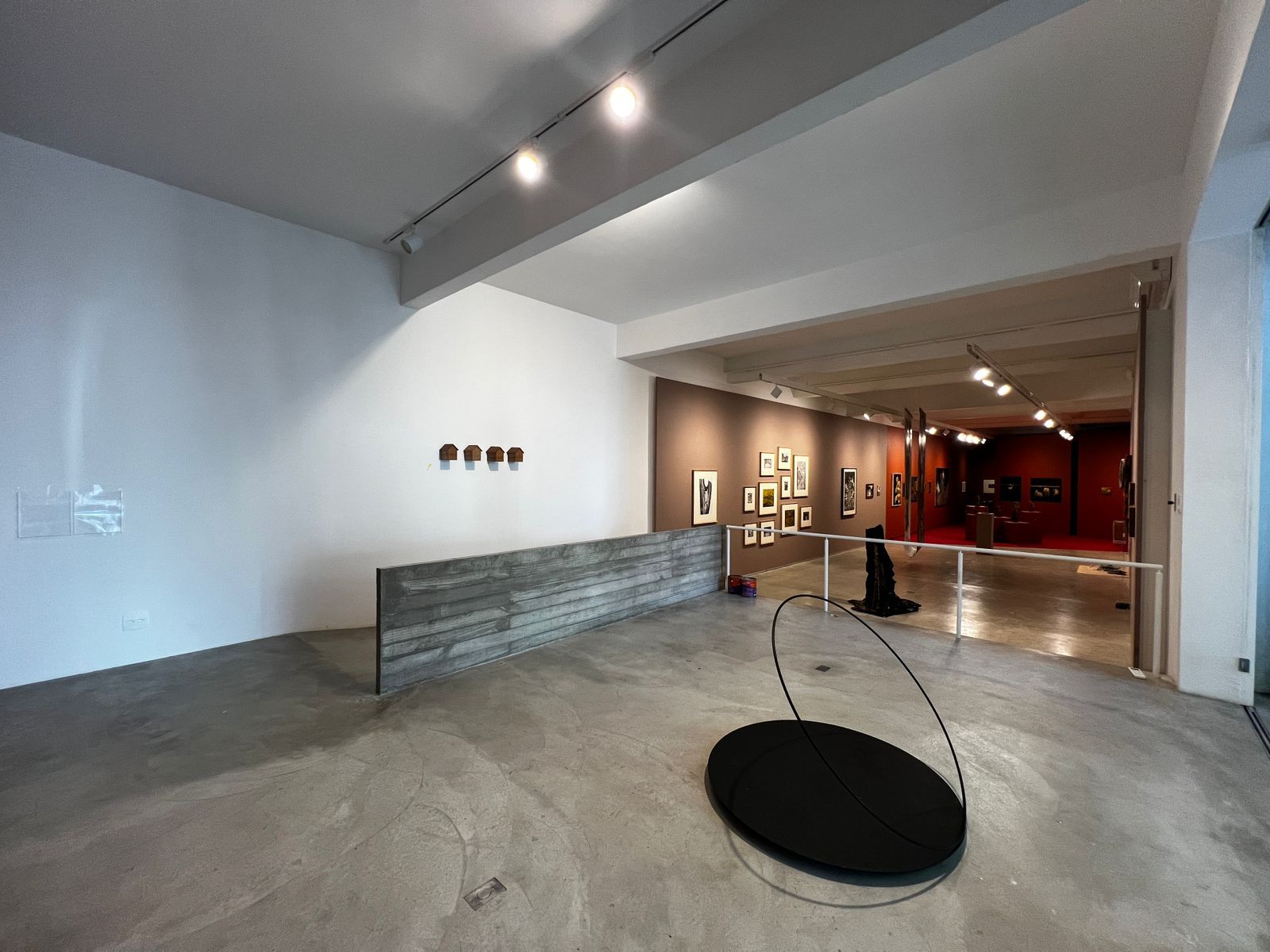
Like inhabitants of an island, in the gallery’s central space, sculptures by artists from the Padre Cícero Artisans Association occupy – and at the same time compose – a landscape of logs of umburana, a wood that stakes its claim as coauthor of the artworks. They portray Padre Cícero still as a stub, foliage which is trunks, incomplete landscapes found underneath a tree, and the body of those who carry creatures and beasts on their back. These figures are touted by Darks Miranda’s bloody gothic volcano – a sculpture of diverse matter that seems on the verge of bursting, like cracks in floor tiles.
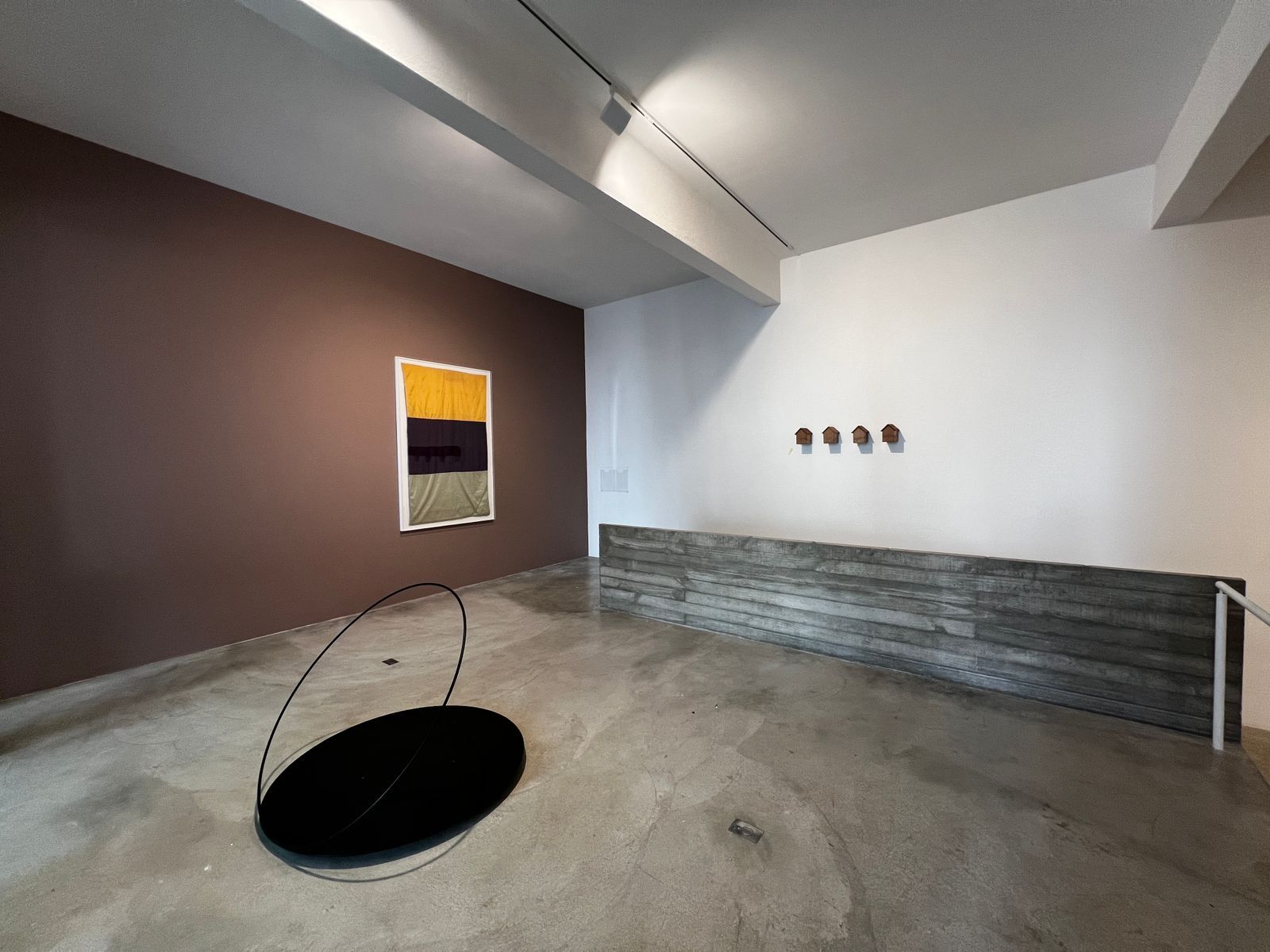
The exhibition culminates in artworks that appease the tensions between the real and the phantasmagoric. Sara Costa seals into her paintings the climate of the days, which are always multiple all at once, beginning and ending at dusk. Diego de Santos presents us with the final chapel, all its doors open to a sunset at belly button height, and Leonilson, whose work presents a backland of the intimate and of vulnerabilities, perhaps sums up the Ceará horizon in a formal abstraction of complementary colors named O imperfeito (The imperfect).
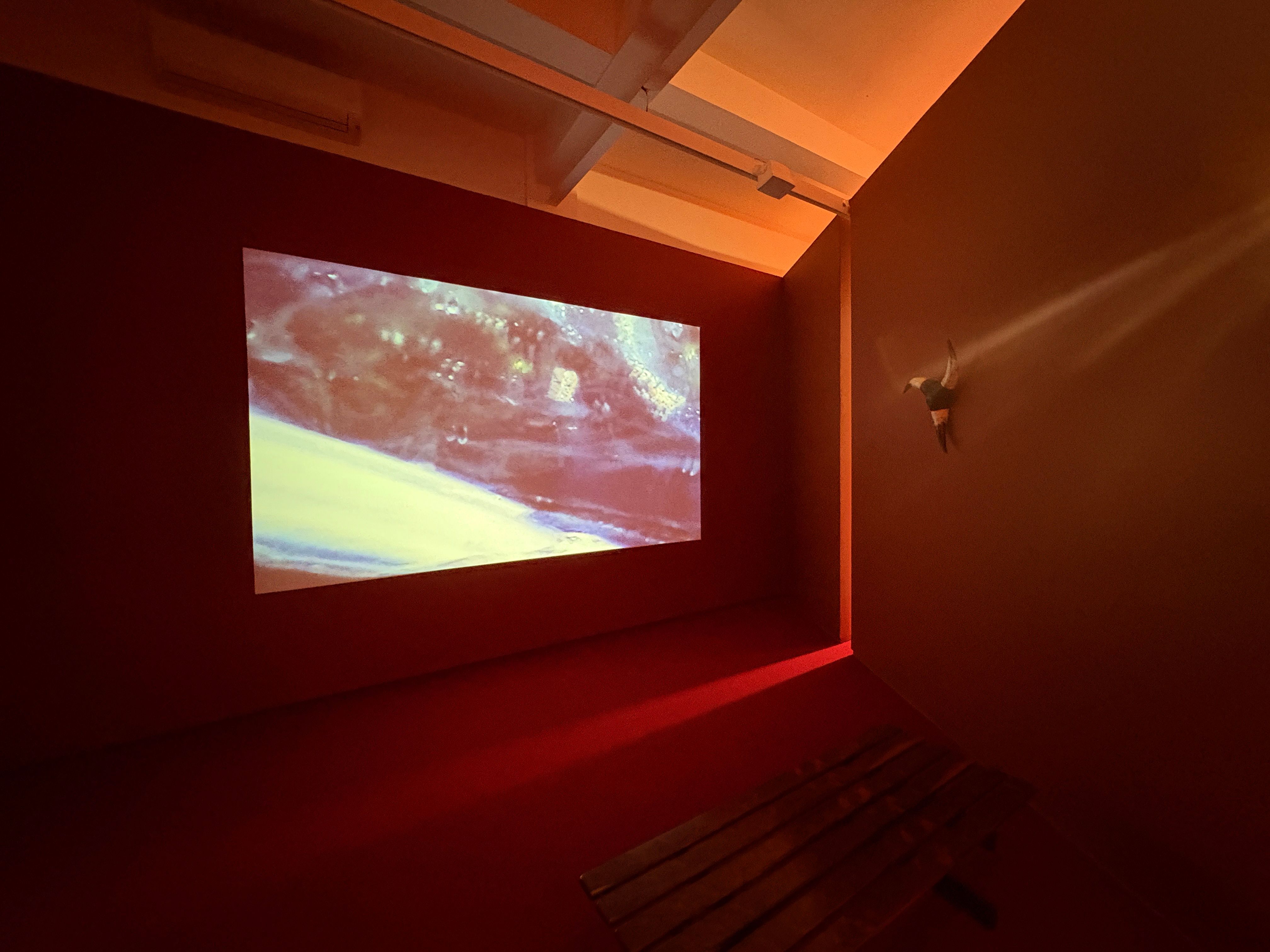
Juno B.’s video CASO 0 — zona de litígio (CASE 0 — litigation zone) wraps up the journey, exploring territorial conflicts and archaeological landscapes of the Ibiapaba region. Featuring soundtrack by Juliana R. and filmed in the Poti River canyons area – where the Borders Lake Dam³ is currently in construction, between the states of Ceará and Piauí –, the piece delivers feasible images of this grand forensic fiction of the caatinga⁴, which awaits its own flooding to finally fulfill the prophecy of becoming one with the great ocean.
The works of the artists in this show have been part of my art career and research for a few years now. From 2019 to 2025, my travels through Ceará, prompted by investigations of my family archaeology and the preservation of the memory of my parents’ landscapes, has deeply connected me with the state’s territory and artists. In the studio, I feel that my gesture often revisits the landscapes of the Inhamuns backlands, of Cariri, of the central backlands, as though they were inhabited by a particular mystery to be unraveled, inherited from my mother and reinvented through my own steps, a crossroads pact entered into through painting.
Throughout this investigation, my fellow artists’ works have shown me tales of amazement and mystery that converse with the emerging narratives in my own work, as though we were traversing the same Carnaubas in our solitary, penitent creative paths.
Midnight Steer Roping, a mass and a Candomblé ritual, is a festivity celebrating the collective career that chases the steer, that flees to find mysteries late into the night. In refusing the escapism of the fantastic, here, it serves as a survival tool. The countryman negotiates with the absurdity – of capital, of sacred imposition, and of daily oppression –, and the Devil, no longer an enemy, becomes an ally in the fight for existence. The exhibition vocalizes haunted testimonials of resistance that interweave and challenge the imaginary real of deep Brazil, where prayer and belief are an indissociable part of truth.
____
1-A literary genre popular in 20th century Northeast Brazil.
2-Brosogó, Militão and the Devil.
3-Barragem do Lago de Fronteiras.
4-A savannah-like biome in Brazil.
Installation